
UTCB hosts two Erasmus+ Blended Intensive Programmes for Students
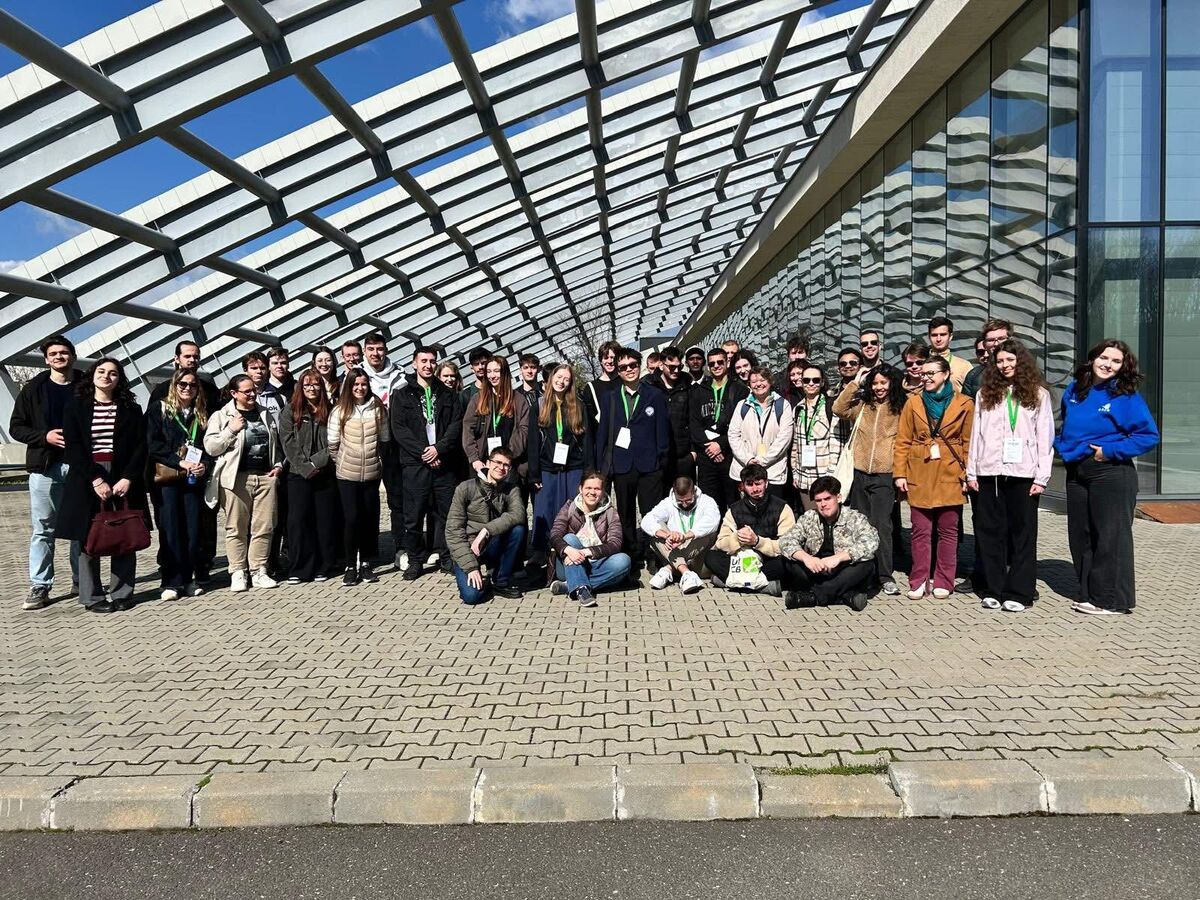
Technical University of Civil Engineering Bucharest (UTCB) successfully hosted two Erasmus+ Blended Intensive Programmes between 6–10 April 2026, bringing together 41 students and academic staff from 10 partner universities across Europe. The initiative transformed Bucharest into a vibrant hub of international collaboration, innovation, and interdisciplinary learning.
A Strong European Academic Network
The programmes welcomed participants from the following partner institutions:
- Slovak University of Technology in Bratislava
- Instituto Politécnico de Leiria
- Czech University of Life Sciences Prague
- University of Bielsko-Biała
- Klaipėda University
- South-West University Neofit Rilski
- Magdeburg-Stendal University of Applied Sciences
- Nikola Vaptsarov Naval Academy
- Odesa I. I. Mechnikov National University
- University of Latvia
Advancing Sustainable Solutions in Construction
The two programmes — Eco-Physics in Construction for a Sustainable Future and Applied Physics in Construction: from Bio-Generation to Energy Insulation — focused on developing sustainable solutions for the construction sector. Through an interdisciplinary approach combining physics, engineering, and applied research, participants explored innovative ways to address real-world challenges.
Throughout the week, students and lecturers collaborated in an engaging international environment, exchanging ideas and perspectives that enriched both academic and cultural understanding.
A true blended learning experience
The programmes were designed as a comprehensive blended learning experience, integrating theoretical knowledge with hands-on practice and cultural exploration. Participants took part in:
- Virtual preparation sessions prior to the physical mobility
- Practical laboratory activities, including bio-energy experiments and insulation challenges
- Technical visits to advanced research and innovation centres such as Extreme Light Infrastructure – Nuclear Physics and EFdeN Sustainable City
- Cultural and social activities highlighting the heritage and dynamic atmosphere of Bucharest
- Final group projects addressing sustainability challenges in construction
Beyond the academic dimension, the programmes created a meaningful space for intercultural exchange. Participants formed lasting connections, shared experiences, and built friendships that truly reflect the spirit of the Erasmus+ programme.
The impact of the programmes is best reflected in the feedback shared by participants, who highlighted both the academic value and the international experience:
“This BIP was more than just a course — it was a real international experience. I learned a lot about sustainable construction and met amazing people from across Europe.”
“Working in international teams helped me see problems from different perspectives. It was challenging, but also very rewarding.”
“Visiting facilities such as Extreme Light Infrastructure – Nuclear Physics and EFdeN Sustainable City made the whole experience feel connected to real-world innovation.”
The initiatives were coordinated by the UTCB Physics Department, with the involvement of Assist. Lect. PhD Cornelia Diac and MSc Phys. Marius Gabriel Mitrea, in collaboration with Assist. Researcher PhD Matei Tom Iacob (3NanoSAE Technology Transfer Center) and Lect. PhD Ganna Fasenko from Odesa I. I. Mechnikov National University.
UTCB also extends its sincere appreciation to the dedicated student volunteers from ASCB and the support of ESN ASE-CMP, whose contribution ensured the successful integration and experience of international participants.